 By: The Pottawatomie County Economic Development Corporation (PCEDC) | 3/31/2026
A quiet Kansas town is stepping onto the global stage of animal health—and this time, the signal is unmistakable.
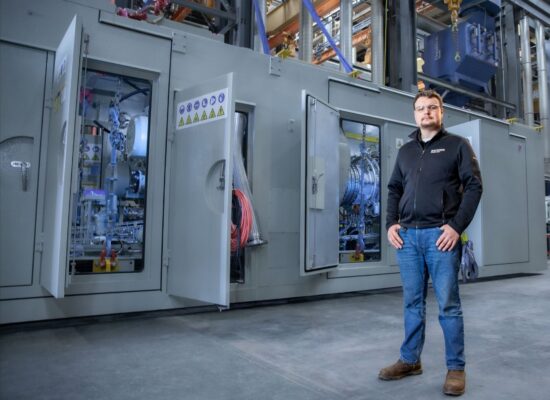
Axiota Animal Health has officially named Wamego, Kansas, as its global headquarters, formalizing what has long been a central hub for the company’s manufacturing, research, and scientific operations. The company’s roots run deep and wide—originating in South Africa and later expanding in Wamego as MS Biotec, building on technology advanced by a team at Kansas State University under Jim Drouillard, where early research and innovation helped shape its trajectory. While the move may appear incremental on paper, it represents something much larger: a validation of the region’s growing influence in the future of biomanufacturing and animal health.
Global Operation, Rooted in Wamego
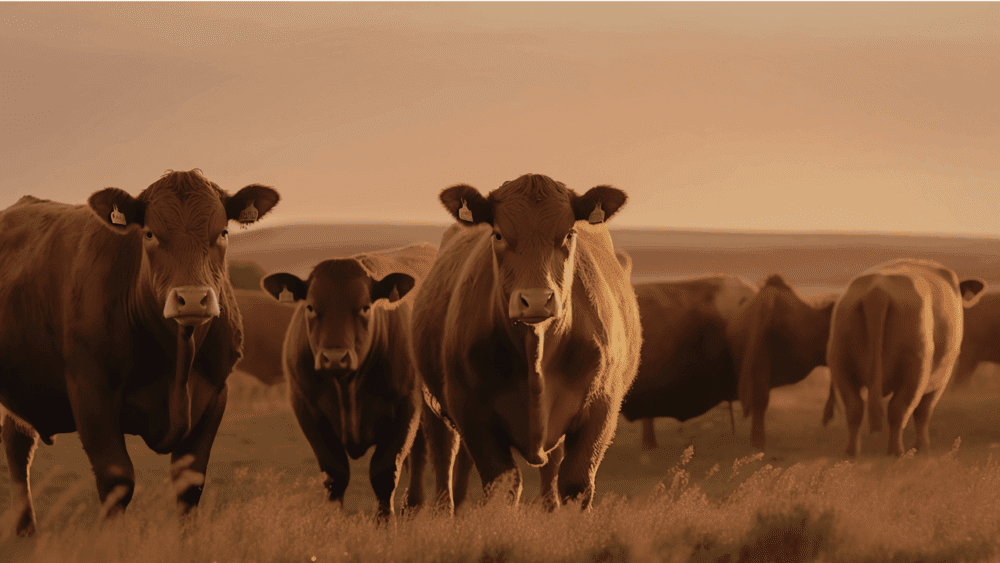
For years, Axiota has quietly built a global footprint from Wamego. From this facility, the company develops and produces cattle health technologies used by producers in more than 30 countries. Its portfolio reflects a broader industry shift toward prevention-based, non-antibiotic solutions—an increasingly important priority as global demand for sustainable and efficient protein production rises.
Among its flagship products are innovations like Lactipro, designed to support rumen health and performance, and Multimin 90, the only FDA-approved injectable supplement delivering a combination of essential trace minerals. These kinds of technologies are not just incremental improvements; they represent a rethinking of how animal health is managed at scale.
The Advantage of the Animal Health Corridor
The decision to elevate Wamego to global headquarters status is also deeply tied to geography—specifically, its position within the KC Animal Health Corridor. Stretching from Manhattan to Columbia, with Kansas City at its center, the Corridor represents the largest concentration of animal health companies in the world. More than half of global animal health sales flow through this region, supported by a dense network of research institutions, private companies, and industry organizations.
For companies like Axiota, that concentration is more than a statistic—it’s a strategic advantage.
Building a Biomanufacturing Hub in the Manhattan Region
Just down the road, Kansas State University serves as a critical partner in both talent development and research collaboration. Known for its strengths in veterinary medicine and biosciences, the university provides a steady pipeline of expertise that companies in the Corridor rely on to innovate and scale. This proximity allows firms not only to recruit top-tier talent but also to remain closely connected to the latest scientific advancements.
And then there is the broader ecosystem taking shape around Manhattan. The presence of the National Bio and Agro-Defense Facility has further elevated the region’s global profile, particularly in the study of foreign animal diseases and biosecurity. Together, these assets are transforming the area into a magnet for investment in animal health and biomanufacturing.
What This Means for the Future of Animal Health
Axiota’s announcement reinforces that trajectory.
Industry leaders within the Corridor have framed the decision as part of a larger pattern: companies are not just locating here—they are deepening their roots and expanding their global influence from within the region. The implication is clear. Innovation in animal health is no longer confined to traditional coastal biotech hubs. Increasingly, it is being driven by places that combine scientific infrastructure, industry concentration, and the practical realities of production agriculture.
A Small Town, A Global Signal
For Wamego, the designation carries both symbolic and tangible weight. It signals that a community of its size can serve as the command center for a global enterprise, while also benefiting from the jobs, investment, and expertise that come with that role.
More broadly, it reflects a shift in how and where innovation happens.
As the demands on global food systems grow more complex, the need for effective, scalable animal health solutions will only intensify. And as companies look for places that can support that mission, regions like the Animal Health Corridor—and communities like Wamego—are becoming increasingly difficult to overlook.
In that sense, this isn’t just an announcement about a headquarters.
It’s a marker of where the future of animal health is being built.