 By: The Pottawatomie County Economic Development Corporation (PCEDC) | 5.27.26
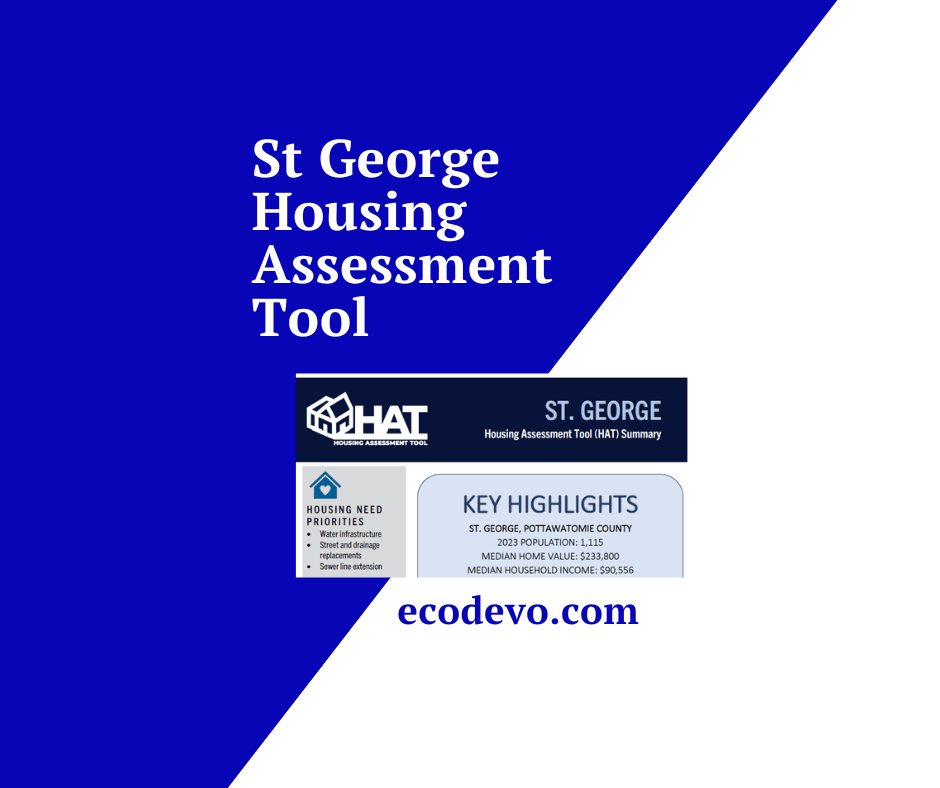
Download the completed St George Housing Assessment Tool as a pdf.
Housing Assessment Tool (HAT)
The Kansas Department of Commerce’s Housing Assessment Tool (HAT) is a self-guided resource that helps communities systematically evaluate their local housing environment. Designed to be implemented over a few months by a community-led housing committee, the HAT involves compiling local data—such as demographics, affordability metrics, housing stock conditions, and input from employers and realtors—alongside public engagement. The result is a detailed profile of housing strengths, needs, and priorities. This enables communities to make data-driven decisions and strategically direct efforts toward the greatest areas of need.
The importance of the HAT extends well beyond just data gathering—it positions local leaders to confidently present findings to the Housing Interagency Advisory Committee, unlocking potential funding avenues at the state and federal level. It also removes the burden and expense of contracting external consultants, empowering communities to take ownership of their housing strategy. Moreover, the HAT helps align housing development with economic goals, ensuring workforce needs are met and investment is sustainable.
Housing Assessments Across Pottawatomie County
Because many small communities lack resources to lead a multi-month project, Pottawatomie County Economic Development Corporation has stepped in to help, partnering with community stakeholders to guide the work.
Highlights from the St George Housing Assessment
St. George continues to experience steady growth as one of the desirable small-town communities in southern Pottawatomie County. With its proximity to Manhattan, strong schools, and expanding regional job opportunities, the recently completed St. George Housing Assessment Tool (HAT) provides a detailed look at the community’s housing market, infrastructure challenges, and future development needs. Below are the major takeaways from the report.
Highlights of the report include:
Steady population growth and continued demand
St. George’s population has grown 38% since 2013 to 1,115 residents, driven largely by families seeking a small-town lifestyle with convenient access to Manhattan and regional employment centers.- Rising home values and increasing market pressure
Median household income has grown to $90,556, but median home values have climbed to $233,800—a 75.4% increase since 2013. Housing prices have significantly outpaced income growth, making affordable homeownership increasingly difficult for middle-income households. - Strong quality-of-life assets
Residents consistently cited St. George’s small-town feel, strong school district, safety, and sense of community as key strengths. Families value the ability for children to safely play outdoors and for neighbors to know one another. - Infrastructure challenges impacting growth
Water quality concerns, aging streets, stormwater drainage issues, and sewer infrastructure needs remain the largest barriers to additional housing development and reinvestment. The community is actively pursuing solutions, including blending water with Rural Water District #1 to address nitrate concerns. - Reinvestment efforts are underway
The community has seen significant cleanup and reinvestment within the local mobile home park under new ownership, including new units, infrastructure upgrades, and planned amenities such as playgrounds and paved roads. High incomes + high home values
Household incomes are among the highest in the county ($120,370 median household income), but median home values of $311,400 and limited housing variety put pressure on middle-income families and first-time homebuyers.Newer housing stock—but limited affordability
Most homes were built after 2000, creating a high-quality supply but very few moderately priced options. Entry-level and mid-range housing is notably scarce.Strong asset base for future development
Blue Township benefits from visible first responders, recent infrastructure investments, high-income residents, and amenities like the 10-foot Green Valley walking trail—all of which strengthen the case for additional housing and commercial expansion.
Key Findings of the Assessment Include:
Major Gaps in Housing Variety and Affordability
The assessment identified clear need for:
- Entry-level single-family homes
- Mid-level single-family homes
- Duplexes and townhomes
- Rental units below $1,000/month
- Senior-friendly, level-entry housing
- Workforce and moderate-income housing
Current housing inventory is concentrated in the $200,000–$400,000 range, while homes between $100,000–$200,000 are extremely limited.
Rental Housing Demand Exceeds Supply
Although only about 21% of households are renters, the report found that rental demand significantly exceeds supply. Crowded housing conditions are most common among renters, with many households sharing housing due to limited availability of affordable units.
Residents and realtors emphasized the need for additional rental options, especially larger family-sized rentals and moderately priced units.
Workforce Housing is Critical for Long-Term Growth
Employers and local stakeholders noted that affordable housing is essential to attracting and retaining workers. Housing shortages limit workforce recruitment and economic growth across the region.
Most needed price points identified by employers and realtors:
- $75,000–$200,000 homes
- Affordable rental housing
- Workforce-focused housing developments
Senior Housing Options are Limited
The report noted that many older residents leave St. George as they age due to a lack of accessible, single-level housing options. There is growing need for:
- Smaller owner-occupied homes
- Level-entry duplexes
- Senior-friendly maintenance-free housing
Expanding these options would help residents age in place and remain within the community.
Housing Conditions are Generally Strong
Most housing in St. George was built after 2000, meaning the overall housing stock is relatively modern and requires minimal rehabilitation. However:
- The original town area contains older homes needing repair and maintenance
- Aging infrastructure contributes to deterioration in some neighborhoods
- Streets, sidewalks, drainage, and sewer systems require major investment
Unlike many rural communities, St. George does not face widespread dilapidated housing or vacancy issues.
Residents Emphasized Infrastructure and Livability Improvements
Community feedback highlighted strong interest in:
- Improved water quality
- More sidewalks and pedestrian infrastructure
- Additional affordable housing
- Better infrastructure maintenance
- Continued community cleanliness and code enforcement
Residents expressed strong satisfaction with the community overall and want to see growth managed in a way that preserves St. George’s character and quality of life.
Next Steps for Housing in St George
Based on the HAT findings, several priorities emerge for the coming years:
Address Infrastructure Barriers to Unlock Growth
Top priorities include:
- Solving water nitrate issues
- Expanding and repairing sewer infrastructure
- Replacing aging streets
- Improving stormwater drainage
The city has already identified solutions for water quality concerns and hopes to complete key improvements within the next two years.
Expand Attainable and Workforce Housing
Focus areas include:
- Homes in the $100,000–$200,000 range
- Entry-level and moderate-income housing
- Duplexes and townhomes
- Additional rental inventory
- Senior-focused housing options
Increasing housing variety will help support workforce growth, retain residents, and improve affordability.
Support Reinvestment in Older Neighborhoods
The original section of town will require concentrated attention through:
- Infrastructure replacement
- Housing rehabilitation
- Code enforcement
- Potential infill and redevelopment opportunities
Continued cleanup efforts and community pride initiatives are already helping improve neighborhood conditions.
Strengthen Regional Collaboration
Future housing success will depend on coordination between:
- City leadership
- Pottawatomie County
- Developers and realtors
- Regional employers
- Infrastructure and utility partners
A collaborative regional approach will help align housing growth with infrastructure capacity and long-term economic development goals.
Explore Funding and Incentive Opportunities
High infrastructure costs and rising construction expenses remain major obstacles. Potential tools may include:
- State and federal infrastructure funding
- Housing development incentives
- Infrastructure partnerships
- Regional collaboration to reduce project risk
Addressing these barriers will be essential to making additional moderate-priced housing financially feasible
Download the completed St George Housing Assessment Tool as a pdf.
More: