By: The Pottawatomie County Economic Development Corporation (PCEDC) | 10/7/2026
The Manhattan region is becoming part of an important story unfolding across energy, advanced manufacturing and emerging technology—and much of that story is happening behind the scenes.
When people think about emerging technology, they may picture artificial intelligence, data centers, advanced computing or the digital services transforming the economy. But those technologies depend on something much more fundamental: power, infrastructure, advanced manufacturing and the people who know how to build it.
The region has an increasingly interesting collection of those assets.
From Wamego to Manhattan and throughout Pottawatomie County, companies and institutions are involved in different parts of the technology and energy ecosystem. Some are manufacturing equipment that generates or supports power. Others are developing sophisticated semiconductor and sensing technologies. Still others are helping move new technologies from research into commercial products.
And at the center of the region’s energy story is a major existing power-generation asset: Jeffrey Energy Center.
Taken together, these pieces demonstrate that the region isn’t simply watching the emerging technology economy develop elsewhere.
Businesses and institutions here are already helping build the infrastructure, equipment and technologies that support it.
Building the Equipment that Powers the Digital Economy
One of the clearest examples is Solar Turbines in Wamego.
In August 2025, Solar Turbines, a wholly owned subsidiary of Caterpillar headquartered in San Diego, took over the former Caterpillar Work Tools facility. The company successfully transitioned approximately 220 employees and made a multimillion-dollar investment in the operation, including workforce retraining, plant retrofits and new equipment.
Within months, the Wamego workforce had produced its first turbine. The first turbine built at the facility shipped in January 2026.
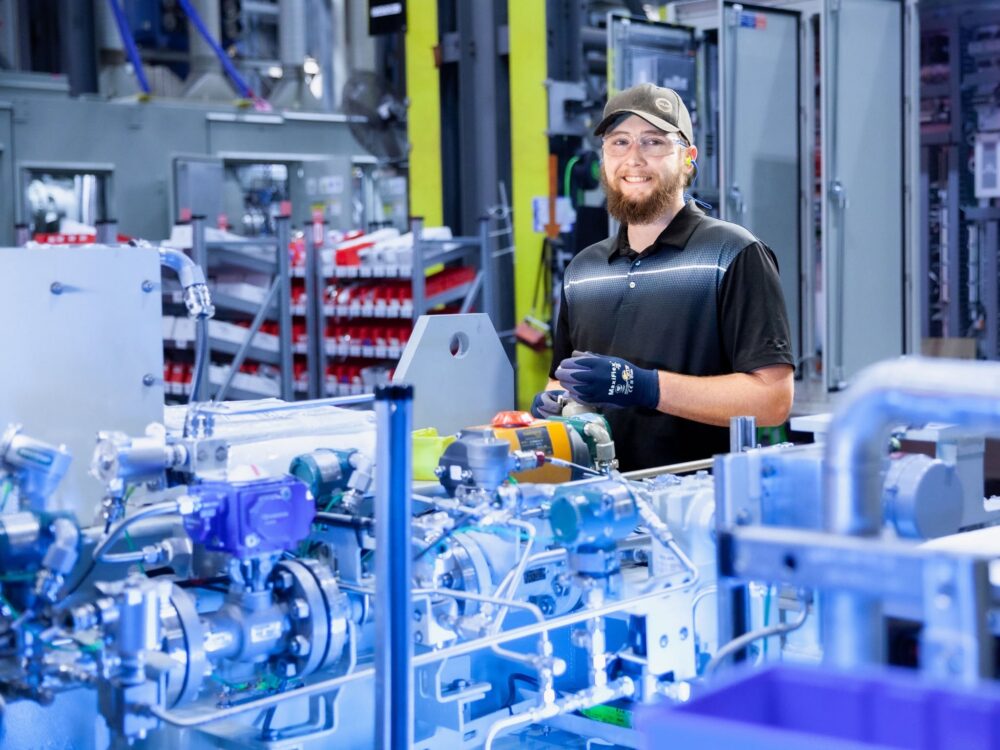
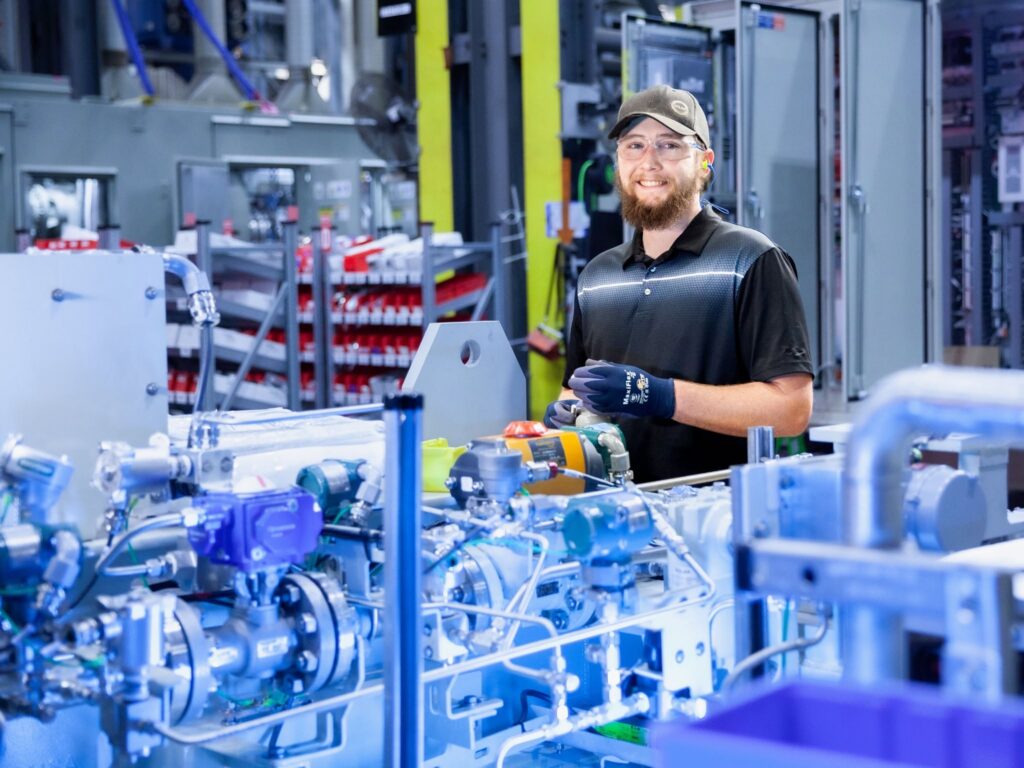
Today, the facility manufactures products including the PGM130 and Titan™ 350 gas turbines. Solar Turbines’ power-generation solutions serve industries including electric utilities and large-scale digital infrastructure, where reliable and resilient power is critical.
The significance for the region is straightforward: advanced power-generation equipment is being manufactured in Wamego by a local workforce and shipped into a global energy market.
As electricity demand grows, particularly from large industrial and technology users, the equipment needed to generate reliable power becomes increasingly important.
That equipment is being built in Pottawatomie County.
Building Infrastructure for the Digital and Energy Economy
PTMW’s expansion in Manhattan provides another connection.
The Kansas-based manufacturer established a new operation in Manhattan in 2025, bringing significant private investment and new manufacturing jobs to the region.
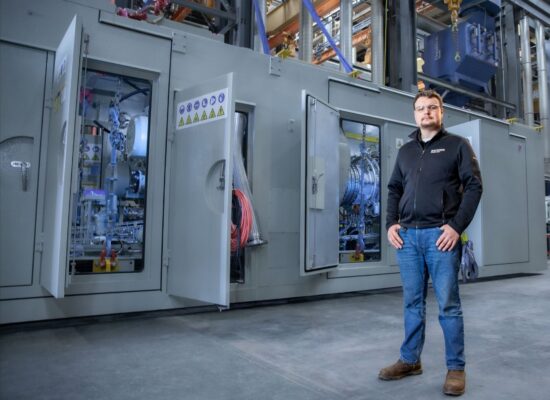
PTMW manufactures modular enclosures, equipment skids and other engineered products for industries including data centers and hyperscalers, power generation and transmission, telecommunications, and industrial and utility applications.
The company has specifically identified growing demand from emerging technology industries, including artificial intelligence and digital infrastructure, as one factor contributing to its expansion.
PTMW isn’t building the computers themselves. It is manufacturing some of the physical infrastructure that supports the energy and technology systems around them.
That distinction is important because the emerging technology economy is much larger than the buildings that house servers.
It includes electrical systems, power generation, energy storage, cooling, equipment enclosures, telecommunications, construction, engineering and advanced manufacturing.
PTMW is now part of that broader supply chain from its Manhattan facility.
Developing Advanced Technology in Manhattan
The region’s technology story extends beyond energy infrastructure.
Radiation Detection Technologies (RDT) is a Manhattan-based advanced technology company developing and manufacturing semiconductor and radiation-detection technologies.
Founded in 2011 as a spinout of research conducted at Kansas State University, RDT develops semiconductor devices, radiation detectors and related technologies for applications including energy, defense, healthcare, agriculture and space.
The company has invested in sophisticated manufacturing capabilities, including a cleanroom for semiconductor processing, electronics assembly and crystal-growth equipment.
RDT’s growth is an important example of a different part of the emerging technology ecosystem: developing and manufacturing highly specialized technology products here in the Manhattan region.
The company has grown from university research into a commercial technology business with customers and applications well beyond the region. And with another company announcement on the horizon, RDT is continuing to be a company to watch as the region’s advanced technology sector develops.
RDT plays a different role in the region’s emerging technology ecosystem. Its importance isn’t as a supplier to digital infrastructure, but as a developer and manufacturer of highly specialized technologies.
RDT demonstrates that the region already has the research connections, technical talent and specialized facilities necessary to support sophisticated technology manufacturing.
Connecting Research to Commercialization
That connection between research and industry is another regional asset.
Kansas State University’s Technology Development Institute (TDI) helps companies and university researchers move new products and technologies toward commercialization.
TDI provides engineering, prototyping, product development and manufacturing support, giving entrepreneurs and established companies access to equipment and technical expertise as they develop new products.
That creates an important pathway:
Research → development → prototyping → manufacturing → commercialization.
Having those capabilities in the same region can make it easier for researchers, entrepreneurs and companies to turn ideas into products and businesses.
The Manhattan region doesn’t need to become Silicon Valley to participate in emerging technology. It can build on the strengths it already possesses.
Pottawatomie County’s Power Advantage
Then there is the most fundamental piece of the equation: electricity.
Pottawatomie County is home to Jeffrey Energy Center, a major power-generation facility that has long been an important part of the regional electric system.
Its future has evolved as electricity demand has changed.
Evergy’s earlier planning contemplated retirement of Jeffrey units. But in its 2025 Integrated Resource Plan, Evergy changed the long-term outlook for Jeffrey 2, planning for the unit to be converted to natural gas in 2030 rather than retired. Evergy cited higher large-customer load-growth expectations among the factors affecting its updated resource plan.
Evergy has also made substantial investments in its existing generation fleet. The company reported nearly $1 billion invested in Kansas infrastructure over three years, including projects at the Jeffrey, La Cygne and Lawrence power plants intended to help ensure those facilities remain available to customers.
The reason is straightforward: the need for reliable electricity is growing.
Large-load Growth is Reshaping the Energy Landscape
Across Kansas and the broader region, utilities are preparing for a significant increase in electricity demand.
Large technology and industrial projects can require extraordinary amounts of power. In 2025, the Kansas Corporation Commission approved a new Large Load Power Service rate plan for customers requiring 75 megawatts or more of peak power. The plan specifically addresses the needs of large-load customers, including energy-intensive technology facilities and large manufacturers, while establishing requirements intended to ensure those customers pay the incremental costs associated with serving them.
Evergy has subsequently reported significant interest from large customers and increased its long-term generation and infrastructure planning in response to changing electricity demand.
That changing energy landscape is directly relevant to Pottawatomie County.
Jeffrey Energy Center is part of the existing generation infrastructure supporting the regional electric system. At the same time, companies such as Solar Turbines are manufacturing equipment to provide reliable power, while PTMW is manufacturing infrastructure used to support energy and technology facilities.
The pieces are connected.
An Ecosystem, Not a Single Industry
The most interesting part of this story isn’t any one company or project.
It’s the combination.
- Solar Turbines in Wamego is manufacturing power-generation equipment.
- PTMW in Manhattan is manufacturing infrastructure used across digital, energy and industrial applications.
- RDT in Manhattan is developing and manufacturing advanced semiconductor and radiation-detection technologies.
- K-State’s Technology Development Institute is helping move new technologies from ideas and research toward commercial products.
- Jeffrey Energy Center provides established power-generation infrastructure in Pottawatomie County at a time when demand for electricity is increasing.
These organizations aren’t all part of the same supply chain, and they don’t all serve the same customers. But together, they illustrate something important about the region’s economic base.
There is already an ecosystem here that combines energy, advanced manufacturing, technology, research and workforce capabilities.
Building on What We Already Have
This doesn’t mean every emerging technology project will be appropriate for the region. Large energy users can raise important questions about electricity supply, transmission, water, land use, infrastructure costs and community impacts. Those questions deserve careful consideration on a project-by-project basis.
But the region also has assets worth recognizing.
It has companies making sophisticated products. It has an established manufacturing workforce. It has technical education and a major research university. It has businesses developing advanced technologies. And it has significant energy infrastructure receiving new investment as electricity demand grows.
Those assets provide a foundation for future economic opportunities—whether they come from additional advanced manufacturing, energy technology, semiconductor development, digital infrastructure or industries that haven’t yet emerged.
Powering What Comes Next
The emerging technology economy is often described in terms of what happens inside servers and computers.
But before the data can be processed, the electricity has to be generated. The equipment has to be manufactured. The infrastructure has to be designed. The technology has to be developed. And people have to build, operate and maintain all of it.
Many of those things are already happening here.
In Wamego, workers are building gas turbines.
In Manhattan, workers are manufacturing infrastructure for energy and digital industries and developing advanced semiconductor technologies.
At K-State, researchers and engineers are helping move new ideas toward commercialization.
And in Pottawatomie County, Jeffrey Energy Center remains an important part of the regional power system as utilities respond to changing electricity demand.
The opportunity for the Manhattan region is not simply to attract the next emerging technology company. It is to recognize and strengthen the ecosystem that is already here.
The combination of energy infrastructure, advanced manufacturing, technology development, research and workforce capabilities gives the region a foundation on which to build.
The region isn’t just preparing for what’s next. In many ways, we’re already helping power it.
Read More About Manufacturing in Wamego and the Greater Manhattan Region:
- One Year of Solar Turbines in Wamego: From Transition to Global Energy Production
- Why a Global Manufacturer Chose Wamego and What it Means for the Future of Animal Health
- A Longtime Kansas Manufacturer is Quietly Paying Thousands Towards Childcare and It’s Transforming Their Workforce
- K-State Opens Biomanufacturing Lab and Training Facility
- NBAF Announces Plan to Hire 150 in Manhattan
- USDA, DHS Celebrate Opening of National Bio and Agro Defense Facility