2025 Annual Report
As we reflect on 2025, we are grateful for the continued partnership of PCEDC’s stakeholders. This year was defined by strong execution, meaningful collaboration, and measurable progress toward countywide economic growth.
Much of Pottawatomie County’s key economic data reflected a generally steady local market and climate throughout the year. The county labor force remained strong, ending the year at over 13,500, and sales tax revenues grew some from the year prior. While home sales and the count of overall building permits issued in Pottawatomie County decreased slightly, the number of permits issued for dwellings actually increased in 2025, showing a movement in the right direction as housing becomes an increasingly crucial part of development for the growing county.
2025 wrapped up with strong labor statistics for Pottawatomie County, and some anticipated slowing in home sales and building permits.
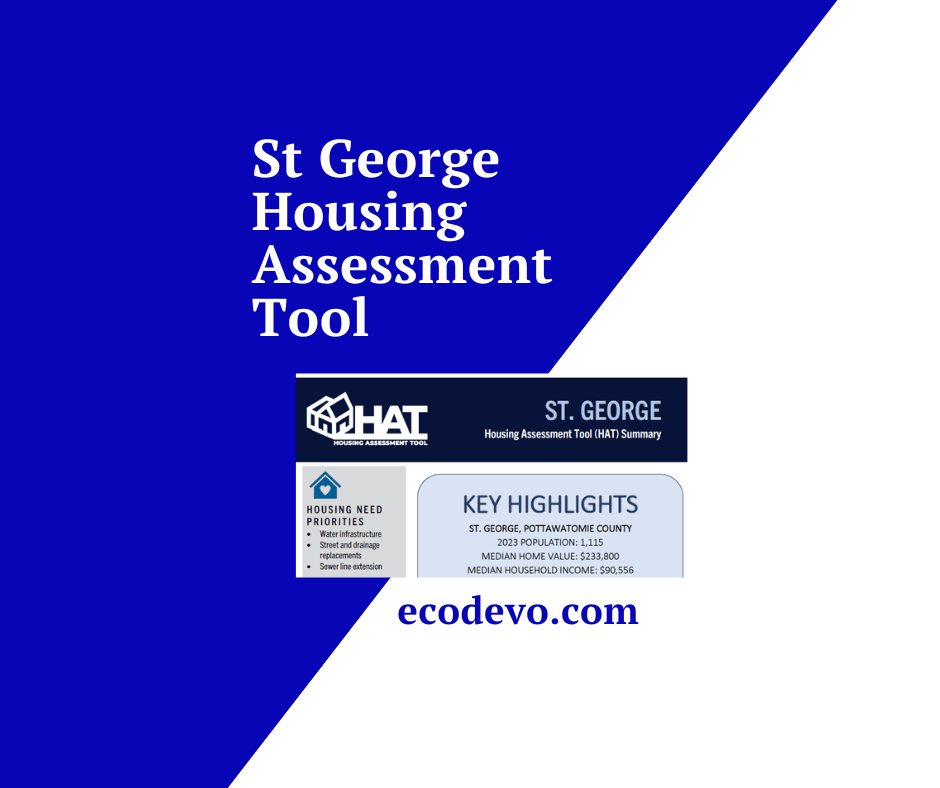
The Kansas Department of Commerce’s Housing Assessment Tool (HAT) is designed to help communities take a structured, data-driven look at their local housing conditions and needs. The following highlights from Blue Township HAT can inform the development of housing projects and are a key requirement for developers seeking support through programs like the Reinvestment Housing Incentive District (RHID), Moderate Income Housing (MIH) grants, and other public resources aimed at addressing housing challenges.
PCEDC investors, county commissioners, and community partners came together recently for a dynamic roundtable discussion on business, workforce, and regional growth. Participants shared common challenges—such as filling entry-level and technical positions, expanding housing options, and competing with larger cities—but also voiced strong optimism about the region’s direction.
Pottawatomie County’s third-quarter 2025 economy remained steady, with consistent home sales, stable tax collections, and a strong labor market despite limited federal data due to the government shutdown. Housing demand continues to outpace supply, particularly in Saint Marys, where recent assessments show readiness for growth in senior, multifamily, and single-family housing. Overall, local economic indicators remain positive amid broader national uncertainty.
The Kansas Department of Commerce’s Housing Assessment Tool (HAT) is designed to help communities take a structured, data-driven look at their local housing conditions and needs. The following highlights from St. Marys HAT can inform the development of housing projects and are a key requirement for developers seeking support through programs like the Reinvestment Housing Incentive District (RHID), Moderate Income Housing (MIH) grants, and other public resources aimed at addressing housing challenges.
Throughout 2025, community conversations have been held across Pottawatomie County to identify needs and priorities at the local, regional, and county-wide levels. This post highlights specific grants and funding sources, organized by project type and community need. These opportunities can be pursued individually by communities or collaboratively, especially for regional projects such as infrastructure upgrades, housing development, and workforce initiatives.
Throughout 2025, community conversations have been held across Pottawatomie County to identify needs and priorities at the local, regional, and county-wide levels. The idea is that having a broad understanding of these things will allow us to connect needs with resources and facilitate collaboration to address solutions.
For the first time since the original cap was set in 1985, the limit for Dependent Care Flexible Spending Accounts (FSAs) has been raised to $7,500, effective January 1, 2026,. This is more than just a tax code update—it’s a meaningful shift that can benefit both families and employers.